
Build Strong Calculation Skills from an Early Age
Train your child to think faster, focus better, and calculate with confidence.
Online & Offline Training Available
- For children aged 5–14 years
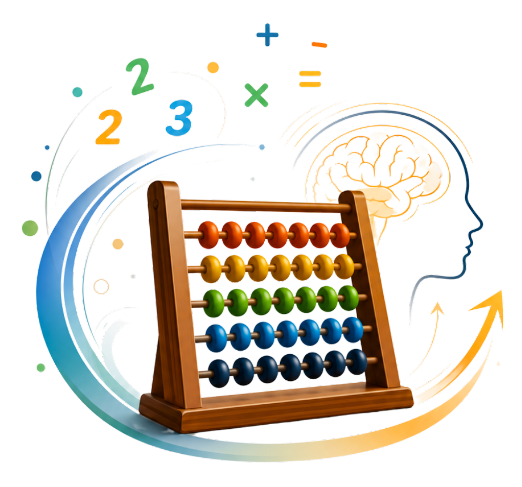
What is Abacus Learning?
Abacus is a powerful method that helps children perform calculations using visualisation and mental techniques.
It strengthens the brain by training both speed and accuracy through structured practice.
How Abacus Helps Your Child Improve Faster

Faster Mental Calculations
Solve arithmetic problems quickly without relying on calculators
Stronger Memory Skills
Improve retention through visual and mental exercises

Better Concentration
Stay focused for longer periods during learning
Improved Accuracy
Reduce mistakes while solving calculations
Brain Coordination
Enhances coordination between the left and right brain
Numerical Confidence
Build comfort and confidence while working with numbers
Train Both Sides of Your Child’s Brain
Abacus learning encourages children to use both sides of the brain, improving balance between logical thinking and creative ability. It helps children learn actively through visualisation and hands-on practice.

Whole Brain Activation
Engages both the left and right brain during learning
Learning by Doing
Hands-on practice improves understanding and retention
Better Brain Balance
Supports overall cognitive development and thinking ability
Whole Brain Activation
Engages both the left and right brain during learning
Learning by Doing
Hands-on practice improves understanding and retention
Better Brain Balance
Supports overall cognitive development and thinking ability

Right Brain Activation Exercise
Abacus training includes a simple yet effective method to engage both sides of the brain. Through a special speed writing exercise in Level 1, children solve counting problems using their non-dominant hand. This hands-on approach helps activate right-brain functions, improves coordination and focus, and supports overall brain balance while making learning more engaging for children.
Boost Memory with Visualisation Techniques
Abacus practice helps children develop strong visualisation skills, enabling them to remember numbers and patterns more clearly. With regular practice, they learn to solve problems mentally without using tools, improving memory, concentration, and overall confidence.

Photographic Memory Development
Improves ability to recall numbers and visual patterns
Mental Calculation Ability
Solve problems without using physical tools
Stronger Focus & Recall
Enhances concentration and memory retention
A Step-by-Step Path to Better Maths Skills
Build skills gradually through multiple levels designed for consistent progress.
Abacus Class Structure
We have 9 levels and 2 books for each level.
Our Junior Level Course is for the (5-8 years) age group, and the 1-8 level course is for the (9-14 years) age group.
Syllabus for each level
Junior
Level
5 to 8 years
Basic Calculations of ADD (+) &SUB (-) with counting of beads.
1st
Level
9 to 14 years
1 to 100 ADD (+) & SUB (-) Calculations of Single Digit Numbers.
2nd
Level
1000+ Numbers ADD (+) & SUB (-) Calculations of Double Digit Numbers.
3rd
Level
10,000+ Numbers ADD (+) & SUB (-) Calculations of Triple Digit Numbers.
4th
Level
ADD (+), SUB (-) & MUL(X) Calculations of Single to single Digit & Single to Double Digit Numbers
5th
Level
ADD (+), SUB (-) & MUL(X) Calculations of Double to Double Digit & Triple to Triple Digit Numbers.
6th
Level
5 to 8 years
ADD (+) & MUL(X) Calculations start with Division.
7th
Level
1st to 7th Level Mind Syllabus ADD (+); SUB (-); MUL(X); DIV(/); & Decimal(.)
Syllabus for Level
Level
5 to 8 years
Basic Calculations of ADD (+) & SUB (-) with counting of beads.
9 to 14 years
1 to 100 ADD (+) & SUB (-) Calculations of Single Digit Numbers.
Level
Level
1000+ Numbers ADD (+) & SUB (-) Calculations of Double Digit Numbers.
10,000+ Numbers ADD (+) & SUB (-) Calculations of Triple Digit Numbers.
Level
Level
ADD (+), SUB (-) & MUL(X) Calculations of Single to single Digit & Single to Double Digit Numbers
ADD (+), SUB (-) & MUL(X) Calculations of Double to Double Digit & Triple to Triple Digit Numbers.
Level
Level
5 to 8 years
ADD (+) & MUL(X) Calculations start with Division.
ADD (+), SUB (-) & MUL(X) Calculations of Higher Digit Numbers (From Decimal Numbers).
Level
Level
1st to 8th Level Mind Syllabus ADD (+); SUB (-); MUL(X); DIV(/); & Decimal(.)
Note:
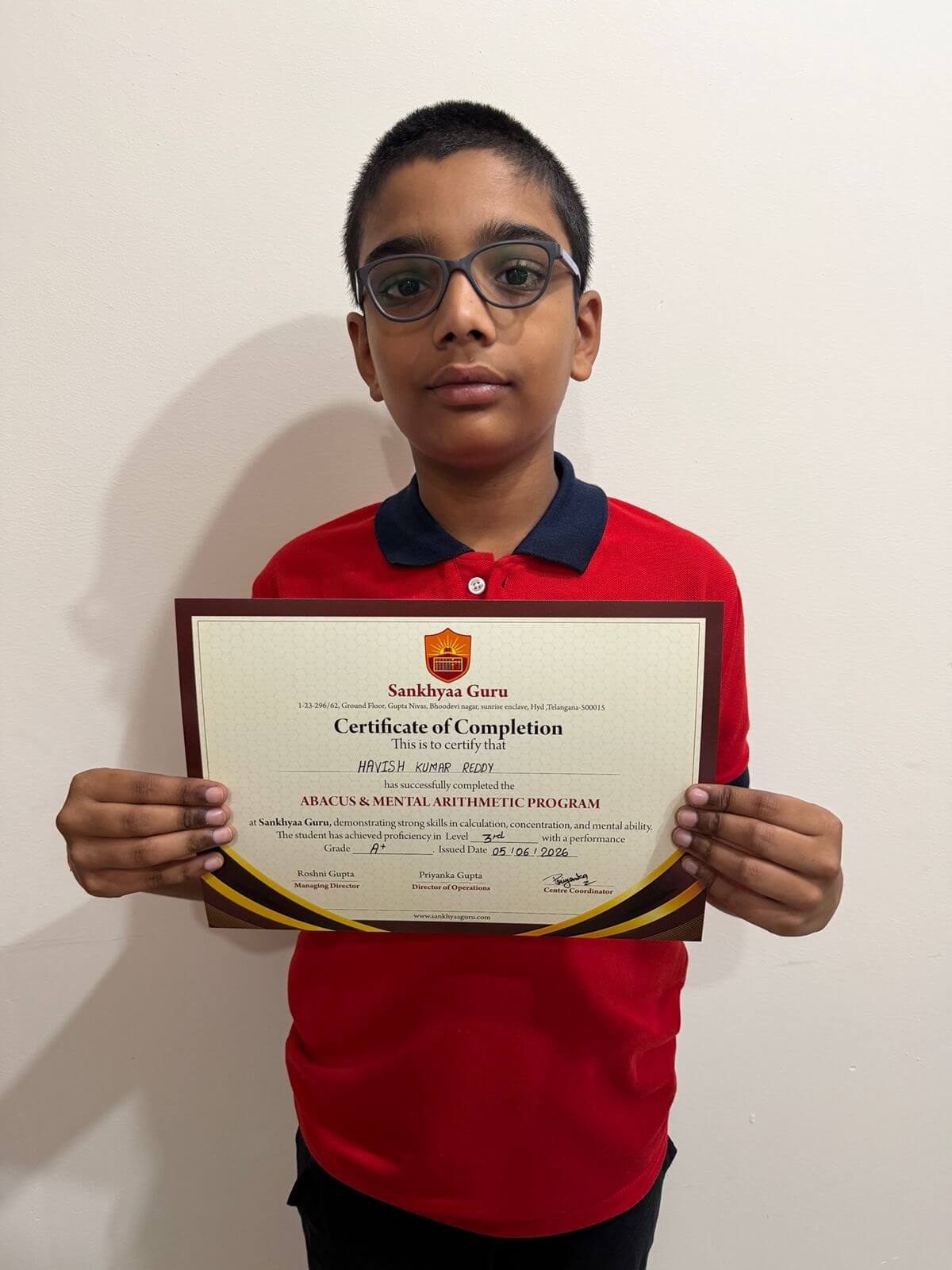
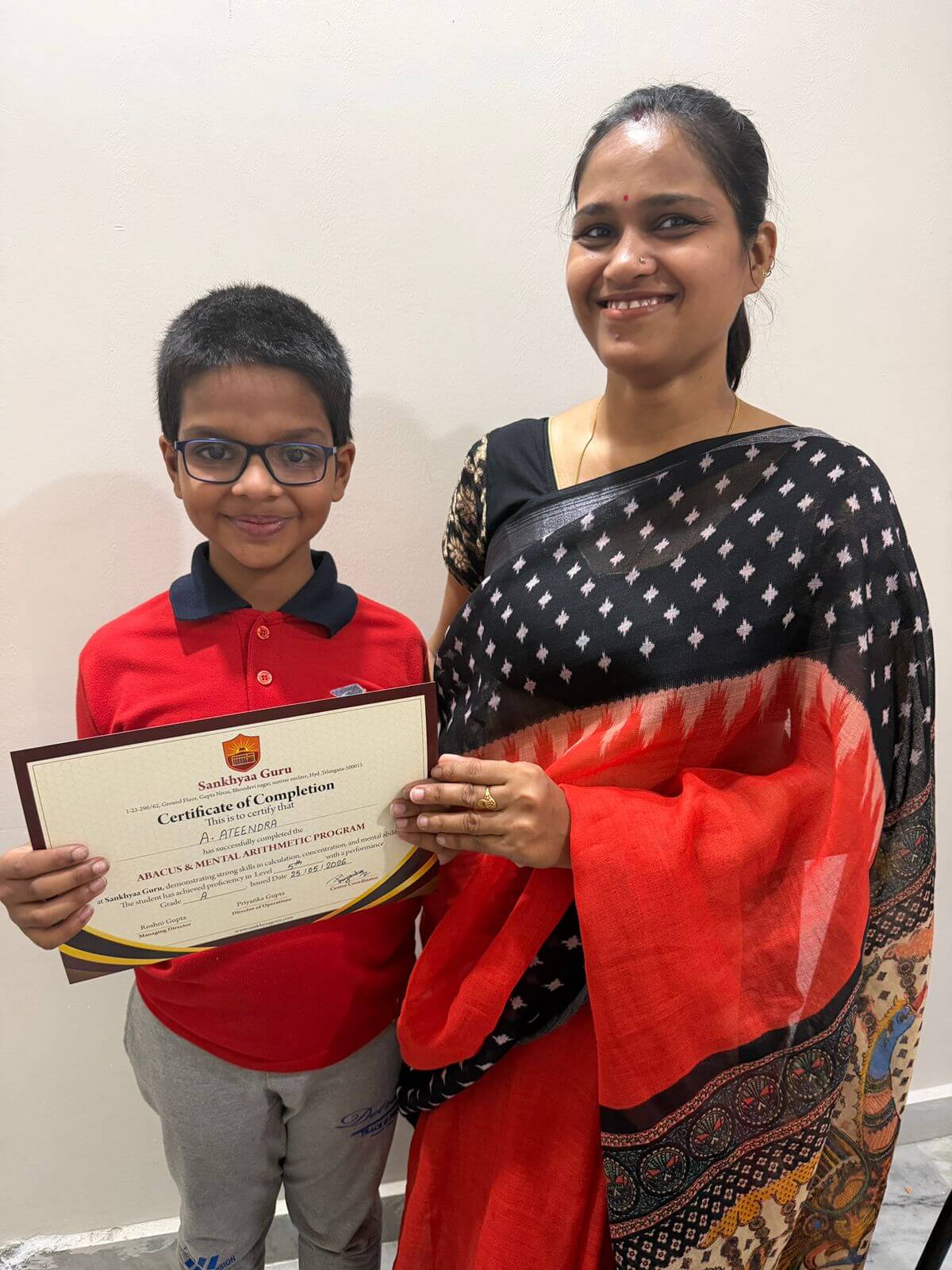
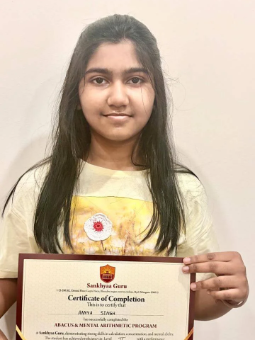
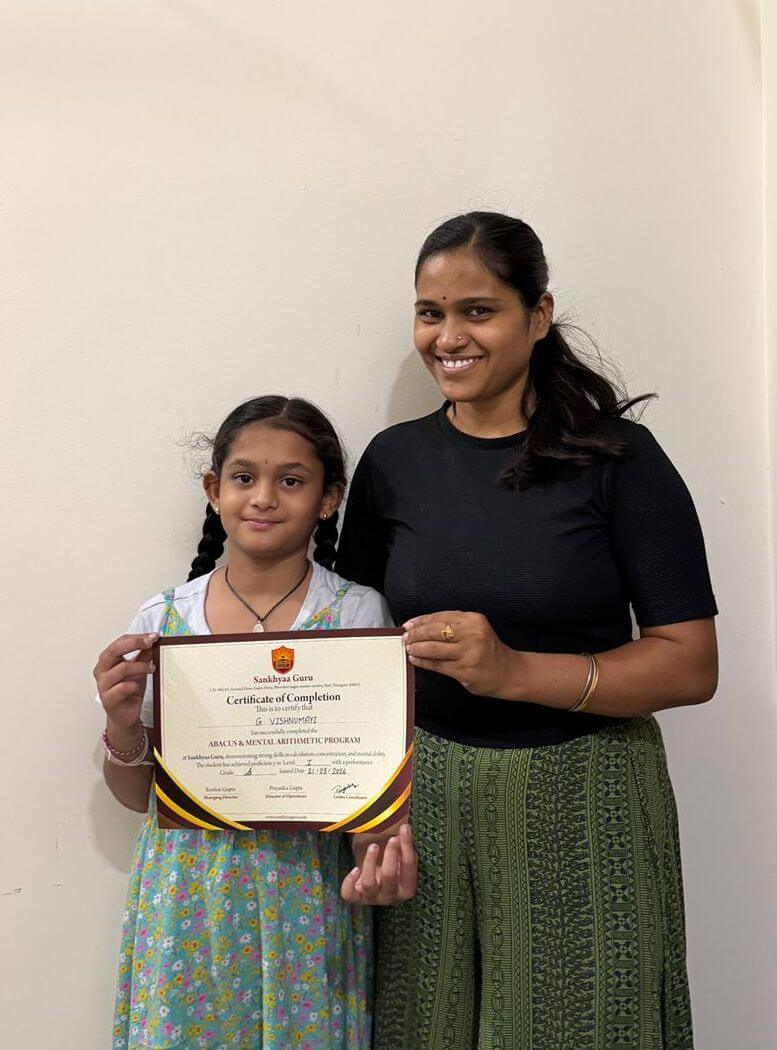
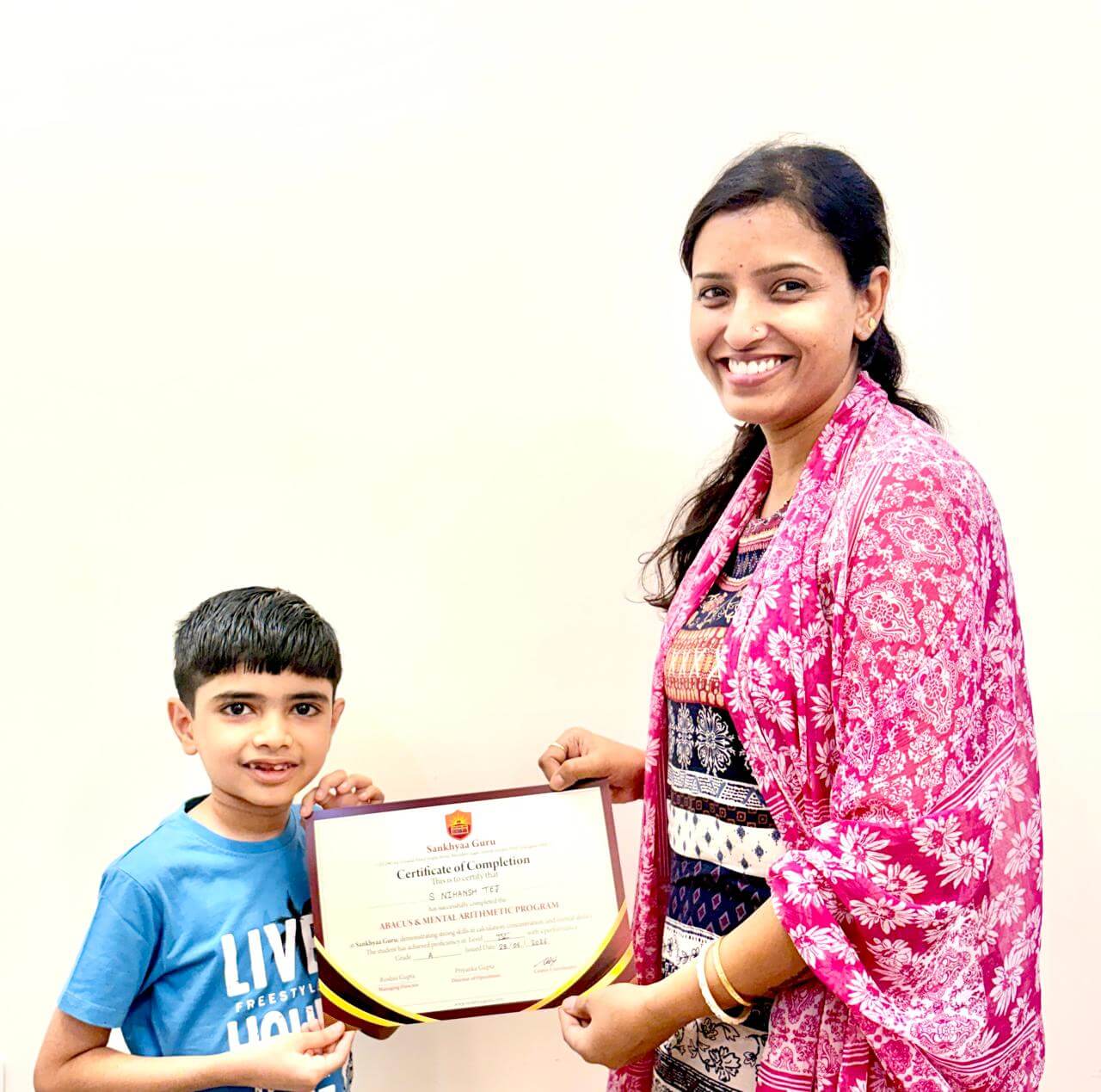
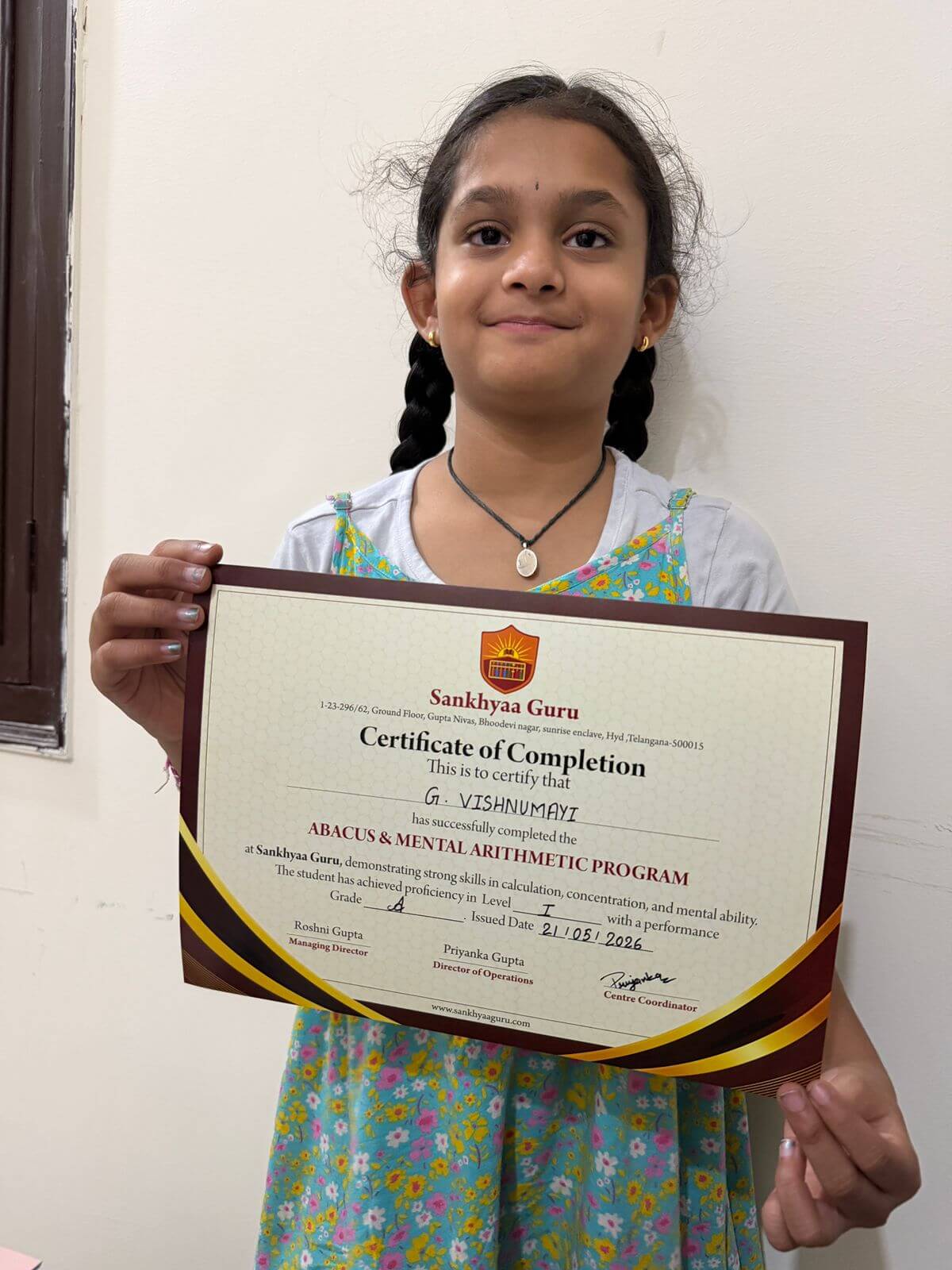
There will be exams after each level, and certificates will be given after successful completion.
The duration for each level is a maximum of 6 months.
Class timings for each level:
- Junior Level to Level 2 - Once a week
- Level 2 to Level 7 - Twice a week
Distribution of Pages across Levels
Junior
Level
1st Lecture to Last Lecture Class Work (4 Pages) from A Book, Home Work (4 Pages) from B Book
1st
Level
1st Lecture & 2nd Lecture Class Work (3 Pages) from A Book 3rd Lecture Class Work (4 Pages) from A Book, Homework (4 Pages) from B Book
2rd Level
–
7th Level
1st Lecture to Last Lecture (6 Pages) From Both Books A & B.
1 Hour Class Structure:
- 5 Min to (Concentration activity)
- 25 Min 4 Pages with Kit
- 5 Min Formula practice
- 25 Min 4 Pages without kit (Oral)
How Your Child Learns Through Practice and Guidance


Visual Learning Techniques
Use beads and visualisation to understand numbers clearly

Stepwise Skill Development
Progress gradually from basics to advanced levels
Hands-on Practice
Learn by doing, not just observing
Repetition for Mastery
Practice regularly to improve speed and accuracy
Performance Monitoring
Track improvement with regular assessments
Visual Learning Techniques
Use beads and visualisation to understand numbers clearly
Stepwise Skill Development
Progress gradually from basics to advanced levels
Hands-on Practice
Learn by doing, not just observing
Repetition for Mastery
Practice regularly to improve speed and accuracy
Performance Monitoring
Track improvement with regular assessments
The Abilities Your Child Develops Over Time

Faster Thinking Ability
Process numbers quickly and efficiently

Improved Focus Levels
Stay attentive during learning and problem-solving

Better Memory Retention
Recall numbers and steps more effectively

Stronger Calculation Skills
Handle numbers with confidence and ease

Increased Confidence
Feel comfortable solving problems independently

Where These Skills Help Your Child

School Performance
Improves speed and accuracy in maths exams

Daily Use
Helps in quick everyday calculations
Foundation Building
Creates a strong base for advanced maths learning

Cognitive Growth
Supports overall brain development
Who Can Benefit the Most from This Program


Children aged 5–14 years
Best stage to develop early calculation skills

Kids with Low Concentration
Helps improve focus and attention span

Students Weak
in Basics
Strengthens foundation in numbers

Children Needing Confidence Boost
Encourages independent problem-solving



Guided by Experienced and Supportive Educators
Led by trained Abacus and Maths educators with 10+ years of experience, focused on building strong fundamentals through structured teaching.

Guided by Experienced and Supportive Educators
Led by trained Abacus and Maths educators with 10+ years of experience, focused on building strong fundamentals through structured teaching.
Visible Improvements You’ll Notice
Faster calculations during practice
Improved focus and attention
Better understanding of numbers
Growing confidence in solving problems








Start Building Your Child’s Maths Confidence Early
Help your child develop speed, focus, and strong calculation skills from a young age.
- Online & Offline learning options
- Quick sign-up process